Jute is one of the most affordable natural fibers in the world and, after cotton, one of the most produced. It is spun, woven, twisted and moulded into everything from carpet backing to grocery bags to road-building geo-textiles. This guide covers what jute fiber actually is, why it behaves the way it does, and where it is used.
What is jute fiber?
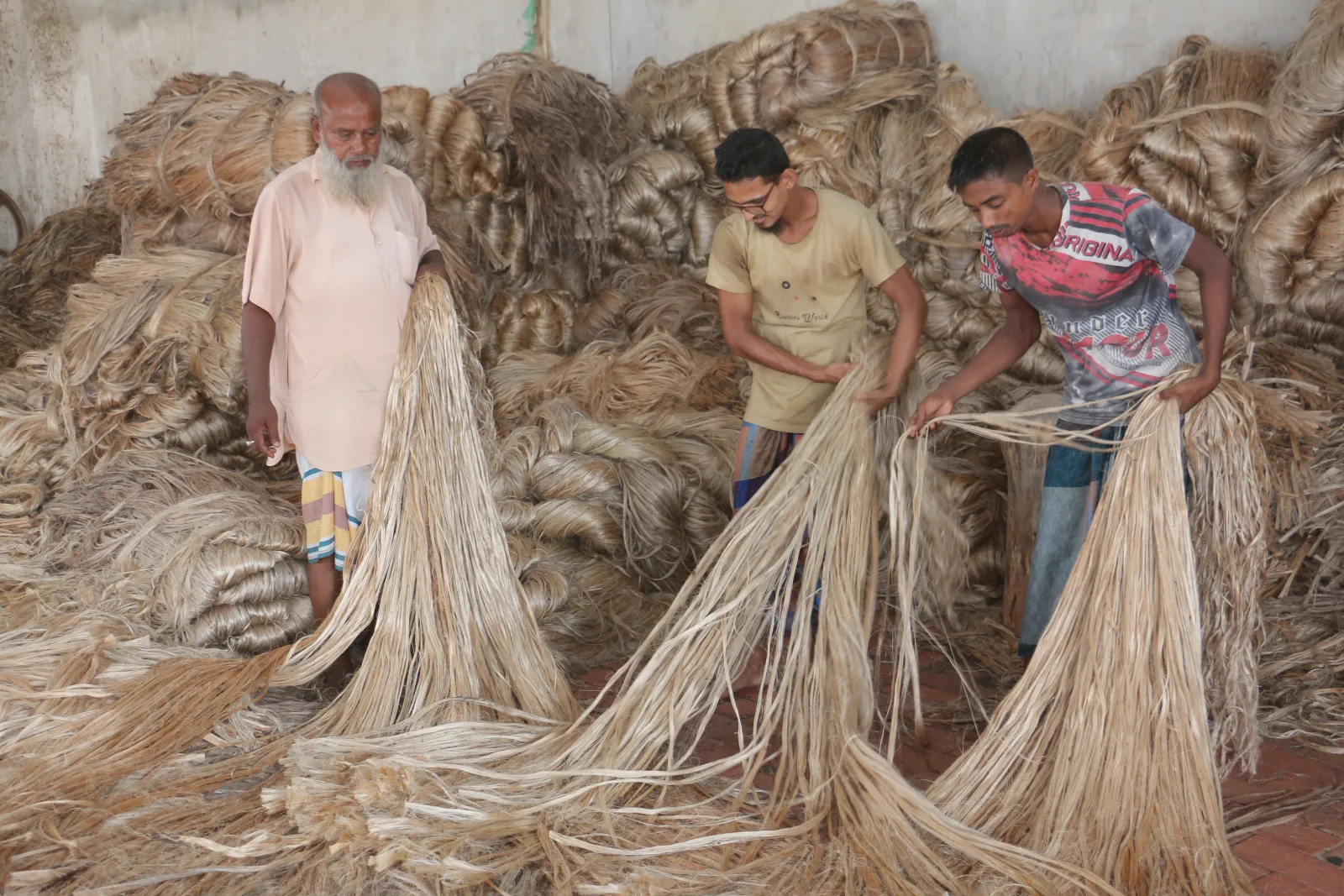
Jute is a long, soft, shiny bast fiber harvested from the stalks of plants in the Corchorus genus — chiefly White jute (C. capsularis) and Tossa jute (C. olitorius). The fiber runs the length of the stalk, just beneath the bark, and is extracted by retting the harvested stems in water and then stripping and washing the fiber by hand. The result is the natural golden-brown strand that earns jute its nickname: the Golden Fiber.
The physical properties of jute
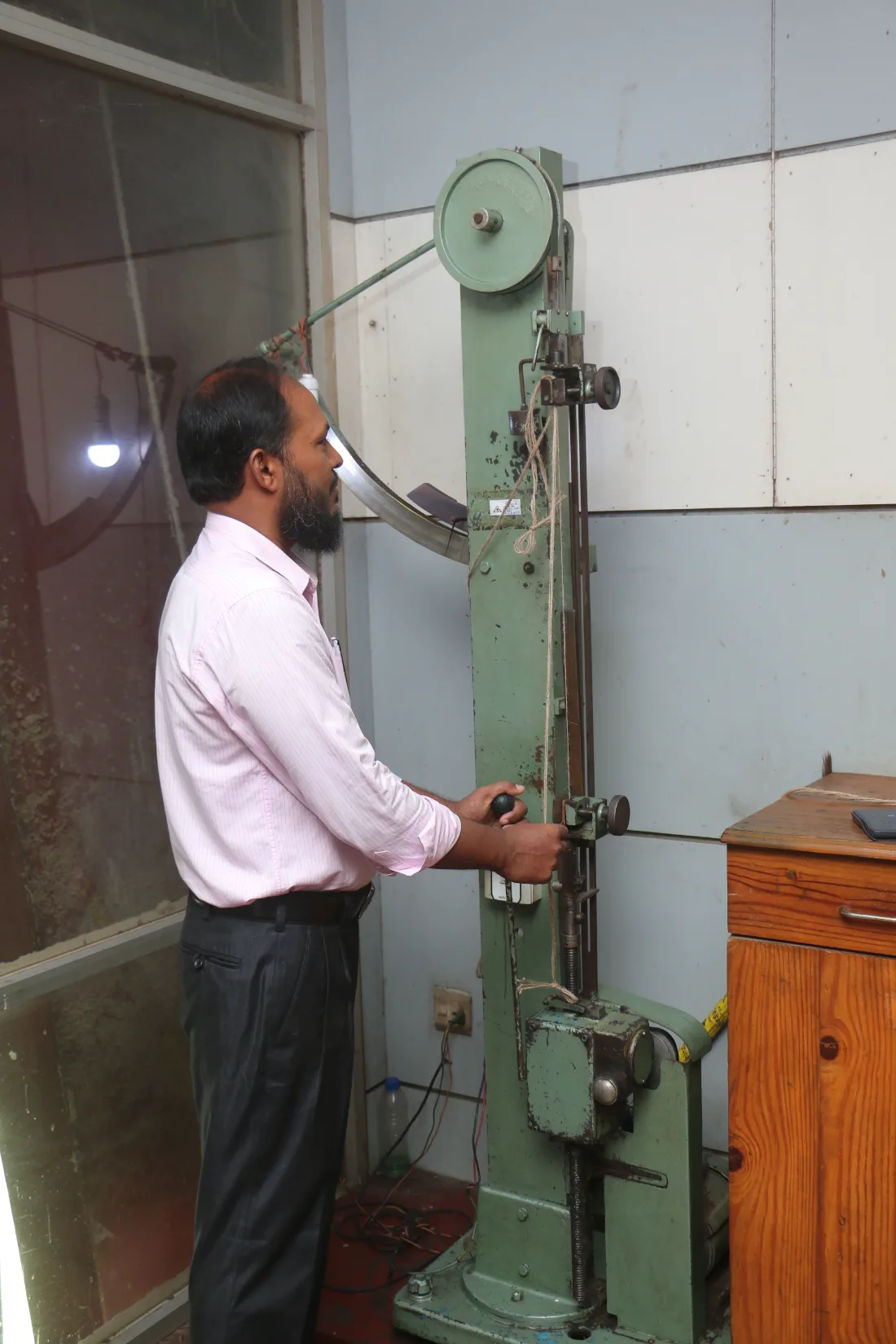
- High tensile strength — strong for its weight, which is why it excels in sacking, rope and backing.
- Low extensibility — it holds its shape under load rather than stretching.
- Good moisture regain — naturally breathable, which helps protect stored agricultural goods.
- Antistatic and insulating — useful in textile and technical applications.
- Coarse but workable hand — blends well and takes dye and finishes.
These properties also vary by grade and origin — which is exactly why Bangladeshi fiber commands a premium for quality-critical uses.
The environmental benefits of jute
Jute's biggest advantage over synthetics is what happens at both ends of its life. It grows from seed to harvest in months with minimal irrigation and little need for pesticides, and at end of life it is fully biodegradable — returning to the soil rather than lingering as microplastic.
- Biodegradable and compostable — breaks down naturally within months.
- Renewable — a fast-growing annual crop, not a finite resource.
- Carbon absorbing — a standing jute crop takes up significant CO₂ as it grows.
- Soil enriching — shed leaves return nutrients to the field.
We compare jute directly against plastic alternatives in jute vs. synthetic fiber.
The many uses of jute fiber
Few natural materials are as versatile. Jute fiber and the yarn spun from it appear across a remarkable range of industries:
| Sector | Typical jute products |
|---|---|
| Flooring | Carpet backing cloth (CBC), rug weaving, underlay |
| Packaging | Hessian sacks, B-Twill bags, food-grade lined bags |
| Agriculture | Grain and coffee sacks, shade netting, baling twine |
| Construction | Jute geo-textiles for erosion control and slope stabilisation |
| Interiors & retail | Décor fabric, upholstery backing, shopping and gift bags |
| Industry | Rope, twine, cable wrapping, composite reinforcement |
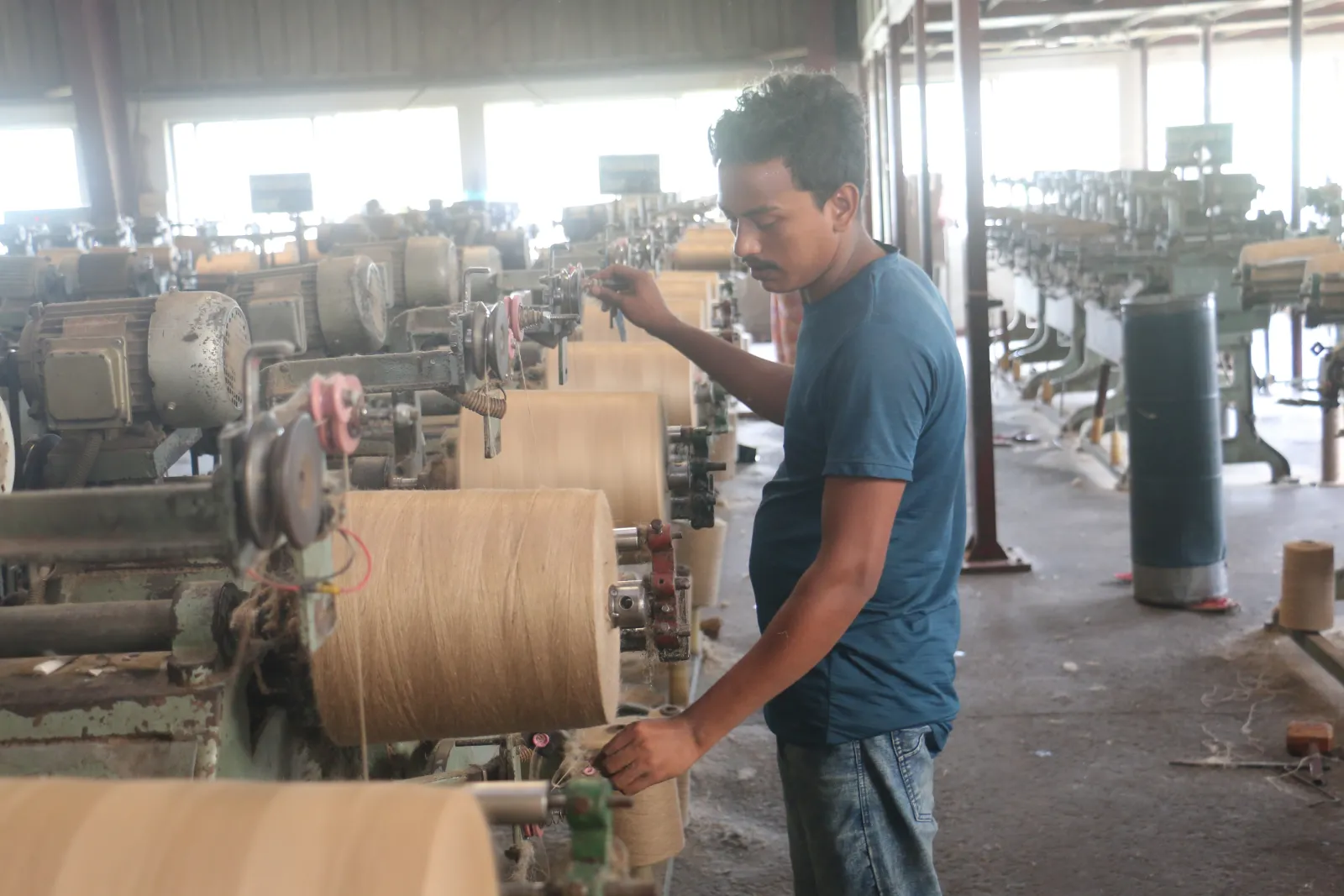
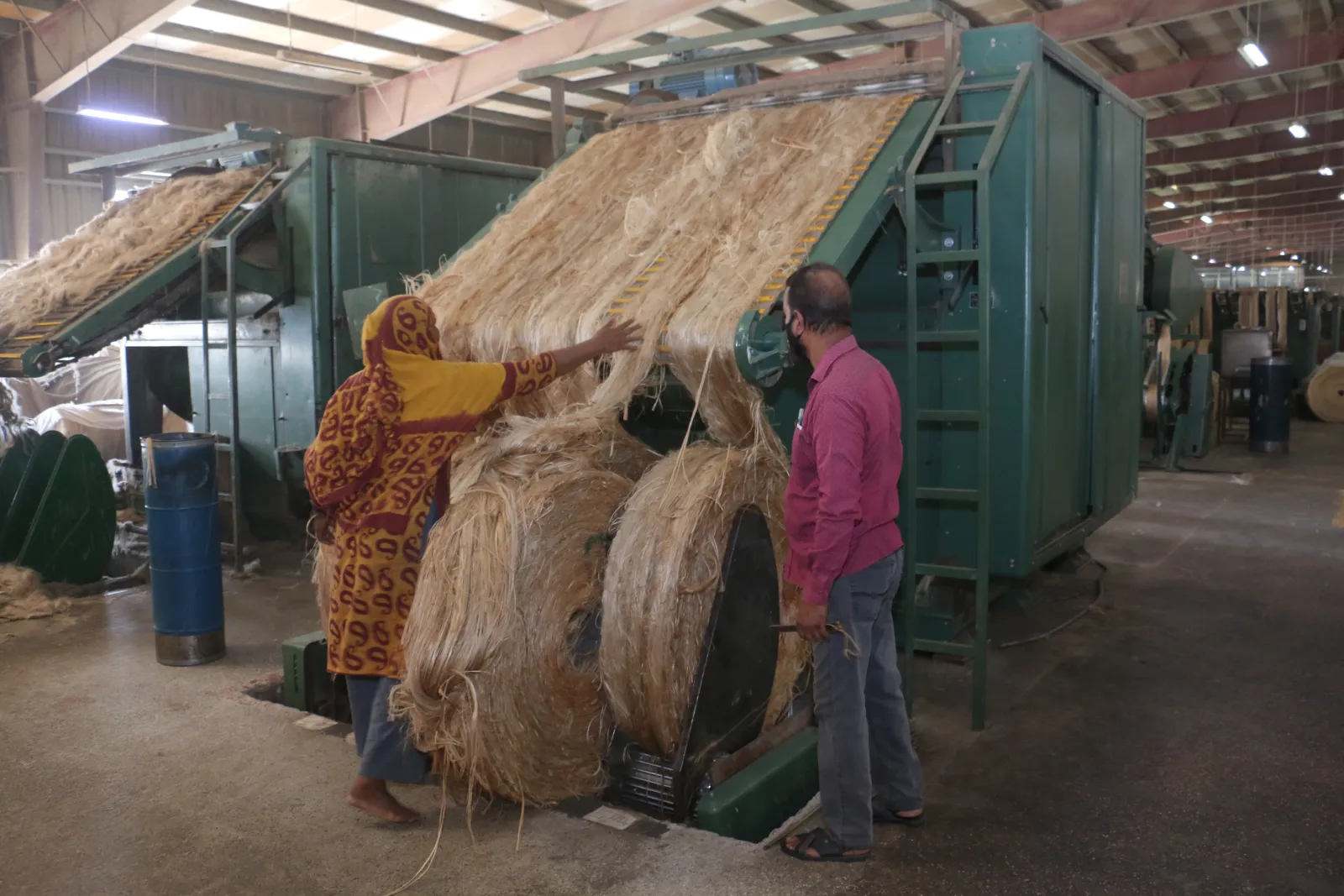
Each of these starts as either raw jute fiber, spun jute yarn, woven hessian fabric, or finished bags and sacks.
Sourcing jute fiber and yarn
Whether you process raw fiber yourself or buy finished yarn and fabric, the quality of the underlying jute is what determines your result. To source Grade-A Bangladeshi fiber and yarn factory-direct, browse our products or request a quote.