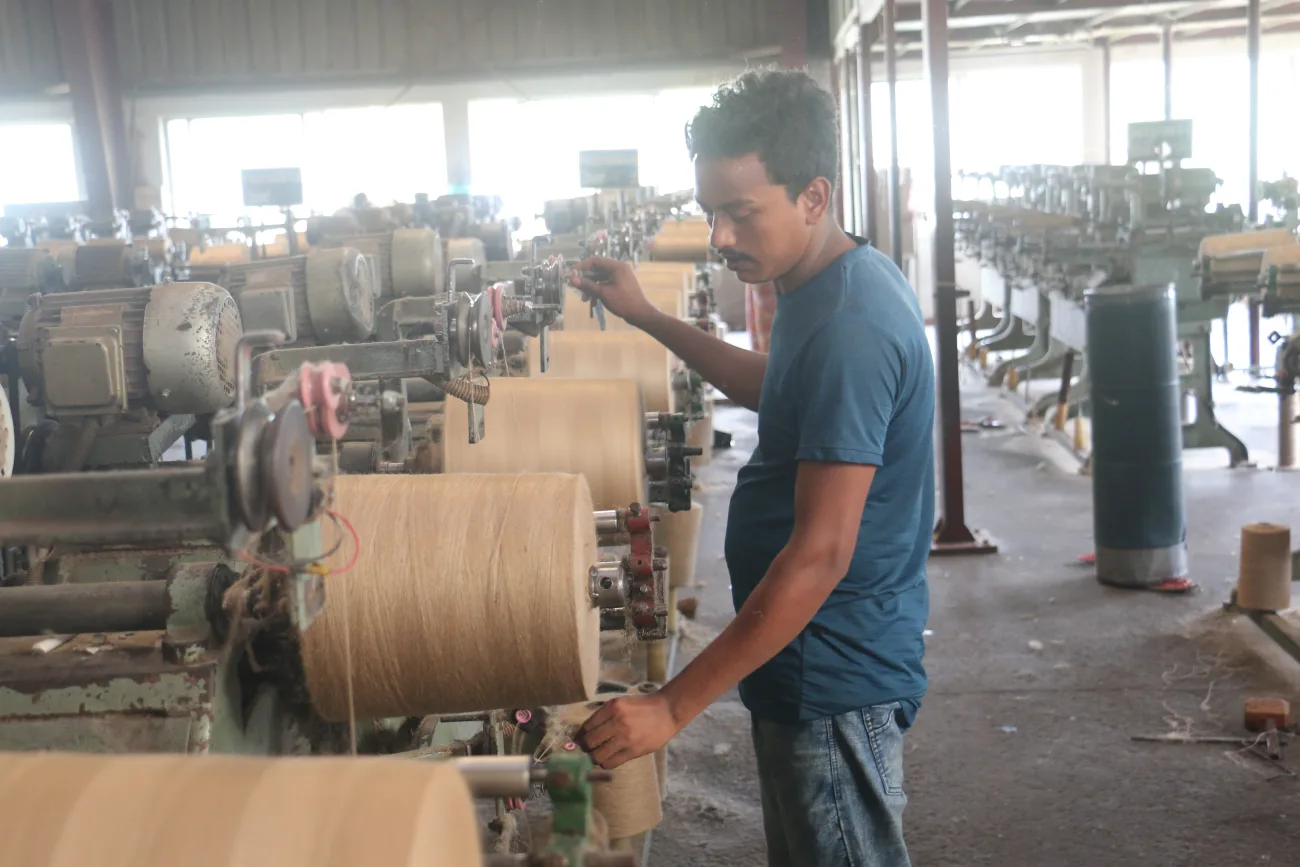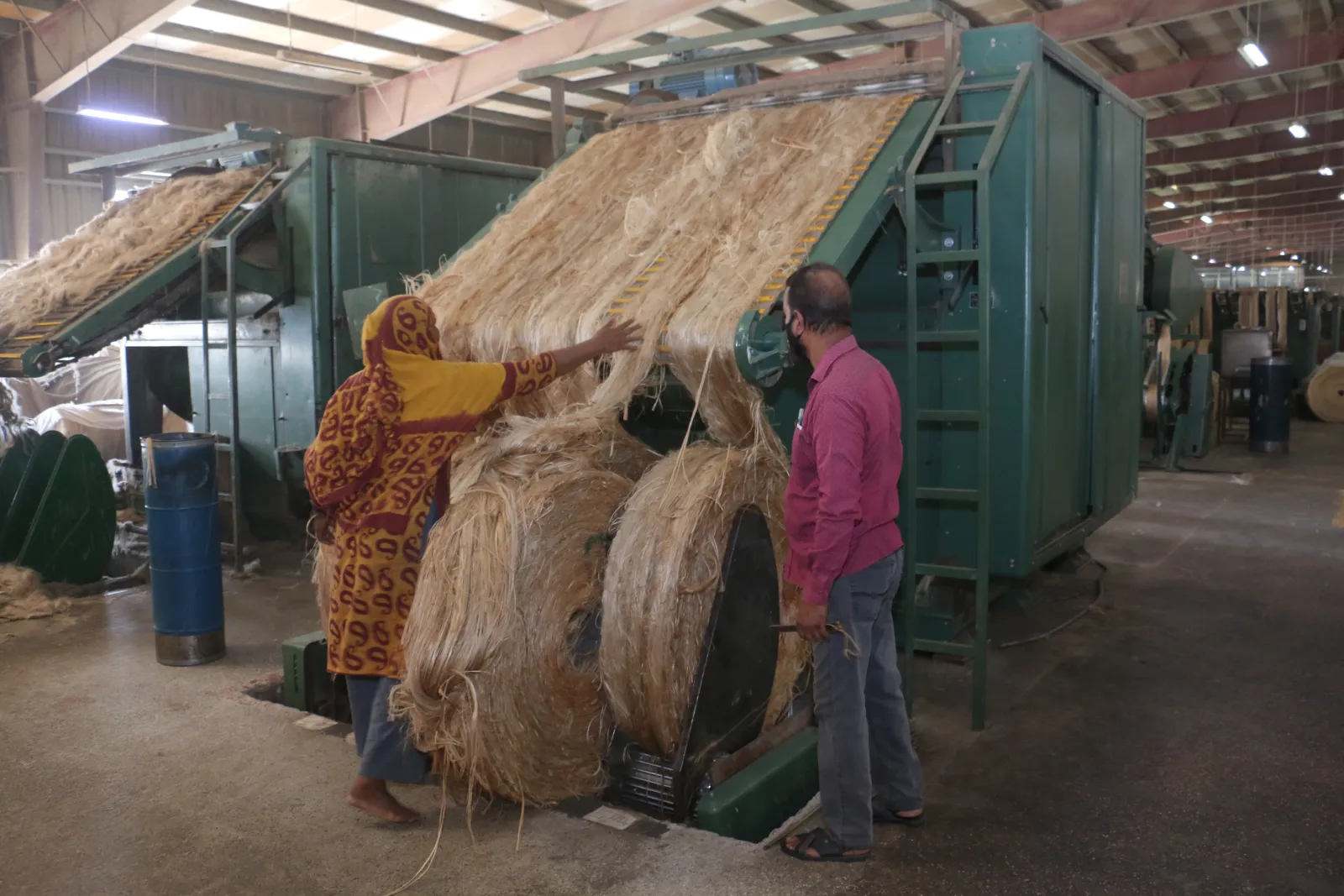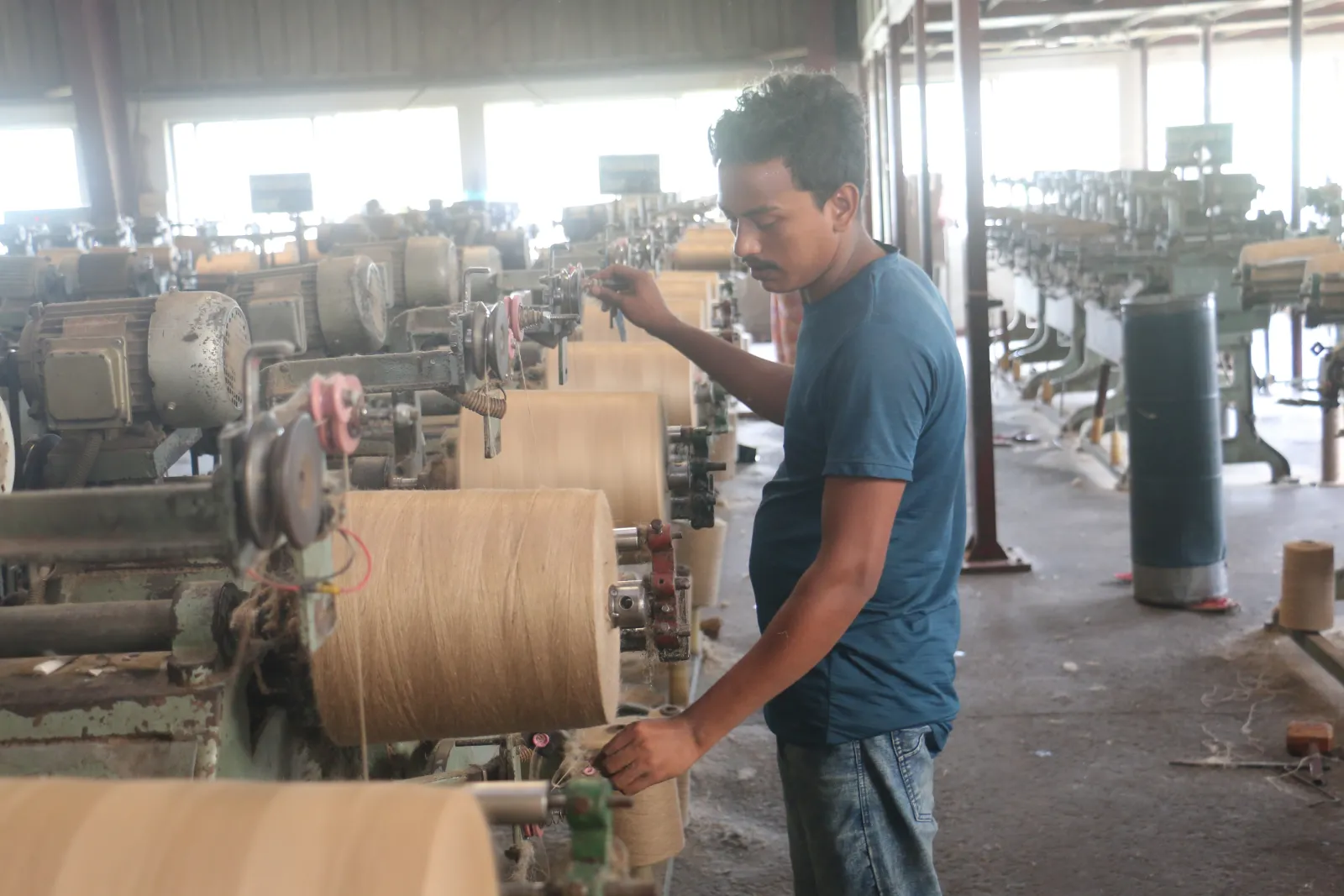
When engineers need to stop a slope washing away while grass establishes on it, one of the oldest and most elegant solutions is also one of the greenest: a jute geotextile. Laid over bare soil, this open-woven natural fabric holds the ground in place, soaks up rainfall, shelters seeds — and then quietly biodegrades into the earth once the vegetation has taken over. This guide explains what jute geotextiles (JGT) are, how they work, their specifications and applications, and how to source them.
A jute geotextile is an open-weave jute fabric used for soil erosion control and stabilisation. It protects and enriches the soil while plants establish, then biodegrades naturally — no plastic left behind.
What is a jute geotextile?
A jute geotextile is a fabric woven from coarse jute yarn into an open, net-like mesh, engineered specifically for ground-engineering use rather than packaging. Unlike tightly woven hessian, JGT has deliberate gaps (apertures) that let vegetation grow through while the fabric holds the soil surface. It is a 100% natural, biodegradable alternative to synthetic geotextiles made from polypropylene or polyester.
How jute geotextiles control erosion
JGT works through several mechanisms at once, which is why it outperforms bare seeding on exposed ground:
- Surface armour — the mesh shields soil from the direct impact of rain, which is what dislodges particles and starts erosion
- Runoff control — it slows the velocity of water flowing over the surface, so less soil is carried away
- Moisture retention — jute absorbs several times its own weight in water, keeping the seedbed moist for germination
- Micro-climate — the fabric moderates temperature and shelters young seedlings
- Soil enrichment — as it biodegrades, it adds organic matter that improves soil structure
The result is a self-terminating system: by the time the jute has broken down, the plant roots it protected are holding the slope instead.
Jute geotextile specifications
JGT is specified much like other jute fabrics — by weight, weave and dimensions — but tuned for ground use. The figures below are representative ranges; the correct specification depends on slope gradient, rainfall and the vegetation you are establishing, so confirm it with the mill or your geotechnical engineer.
| Parameter | Typical range | Notes |
|---|---|---|
| Weight | ~290–1,000 GSM | Heavier for steeper slopes / higher rainfall |
| Weave | Open mesh with defined aperture | Gaps let vegetation through |
| Aperture (mesh opening) | A few mm up to ~15 mm+ | Smaller for finer soils |
| Width | Rolls, commonly ~1–1.2 m and up | Made to requirement |
| Roll length | Long rolls for site laying | Specify total area |
| Finish | Natural, or rot-retarded for longer life | Treatment extends service life |
Key benefits of jute geotextiles
- Highly effective erosion and sediment control on slopes and banks
- 100% biodegradable — leaves no microplastic, unlike synthetic netting
- Actively improves soil with organic matter as it decomposes
- Excellent moisture absorption aids seed germination and establishment
- Renewable, low-carbon and low-cost
- Easy to transport, cut and pin on site
Applications
JGT is used across civil engineering, environmental and landscaping projects:
- Slope and embankment stabilisation on roads, railways and highways
- Riverbank, canal and coastal-bund protection
- Landfill capping and quarry / mine-spoil rehabilitation
- Landscaping, parks and golf-course construction
- Agricultural mulching and orchard soil protection
- Turf reinforcement and re-vegetation of disturbed land
It is one of the most important industrial uses of jute — see more in top industrial uses of jute yarn.
Jute vs. synthetic geotextiles
Synthetic geotextiles last far longer, which suits permanent separation and reinforcement below ground. But for surface erosion control — where you actually want the fabric to disappear once vegetation is established — a natural fabric is often the better and greener choice.
| Factor | Jute geotextile | Synthetic geotextile |
|---|---|---|
| Service life | Temporary (~1–3 years) | Long-term / permanent |
| End of life | Biodegrades, enriches soil | Persists; can shed microplastic |
| Best for | Surface erosion control, re-vegetation | Sub-surface separation, reinforcement |
| Moisture & seed support | High | Low |
| Environmental profile | Renewable, low-carbon | Petroleum-based |
It is the same natural-vs-synthetic trade-off we cover for packaging in jute vs. synthetic fiber.
How to specify and order JGT
- Site conditions — slope gradient, soil type, rainfall/flow
- Target weight (GSM) and aperture — or describe the site and let us recommend
- Width and total area (m²) to be covered
- Finish — natural or rot-retarded for a longer service life
- Delivery timeline, destination port and Incoterm
Not sure which weight you need? Tell us the slope and climate and we will recommend a specification and send a sample.
Standards and testing
Jute geotextiles are an established, standardised material — national and international specifications exist for their weight, tensile strength and aperture, and public works and environmental agencies specify them for erosion-control projects. Ask your supplier for test data (GSM, tensile/breaking strength, aperture) and confirm the standard your project requires; our approach to testing is described in how we ensure quality.
Frequently asked questions
How long do jute geotextiles last?
Untreated JGT typically performs for around one to three years before it fully biodegrades — long enough for vegetation to establish and take over. Rot-retardant treatment extends the service life where a longer window is needed.
Are jute geotextiles biodegradable?
Yes — completely. They break down into organic matter that improves the soil, leaving no plastic residue. That is their central advantage over synthetic erosion netting.
What GSM of jute geotextile do I need?
It depends on the slope steepness, soil and rainfall — heavier fabrics for steeper, wetter sites. Share the site details and we will recommend a suitable weight and aperture.
Can you supply large project quantities?
Yes. We manufacture jute geotextiles and hessian fabric to specification at project scale and ship worldwide.
Source jute geotextiles for your project
Wahab Jute Mills manufactures woven jute fabrics — including geotextiles — to your weight, aperture and width, direct from Khulna, Bangladesh. Tell us your site and requirement and we will spec, sample and quote. Request a quote or browse our products.