Two spools of jute yarn can look almost identical and behave completely differently on a loom. The difference is in the specification — and once you understand the four variables that define jute yarn, sourcing becomes far simpler. This guide breaks them down in plain language.
Understanding jute yarn count
Count is the measure of a yarn's thickness. Jute uses an indirect count system, traditionally expressed in pounds per spyndle — the weight in pounds of a fixed 14,400-yard length. Because it is an indirect system, a lower number means a finer (thinner) yarn and a higher number means a coarser (thicker) one.
Carpet-backing and weaving yarns, hessian warp and weft, twine and sacking yarns each sit in their own count band. If you are unsure which count your application needs, describe the end product and let the mill recommend it.
Single vs. ply yarn
A single yarn is one strand straight off the spinning frame. Plying twists two or more singles together for extra strength and a rounder, more uniform structure.
- Single yarn — economical, used widely in hessian weft and sacking.
- 2-ply and 3-ply — stronger and more abrasion-resistant, used in carpet backing, twine and rope.
- Multi-ply / cabled — maximum strength for heavy industrial rope and twine.
Twist direction: S-twist vs. Z-twist
Twist is what holds the fibers together. Its direction is described as S or Z after the diagonal the surface fibers form. The amount of twist — turns per inch — is just as important: more twist generally means more strength but a harder, less absorbent yarn. Carpet and weaving mills often have a precise twist requirement, so always state it in your spec if you have one.
Jute yarn quality grades
Yarn quality starts with the raw jute fiber it is spun from. Bangladeshi raw jute is officially graded from top to lower grades — Bangla Tossa (BTCA, BTCB, BTC, BTD, BTE…) and Bangla White (BWA, BWB, BWC, BWD…), with top grades reserved for the finest, longest, cleanest fiber. Spinners blend grades to hit a target yarn quality and price point.
Higher fiber grades produce stronger, cleaner, more lustrous yarn with fewer faults — which means fewer breaks on your loom and a better-looking finished product.
Visual quality indicators
- Colour — even, natural golden-brown tone with no grey or black patches.
- Luster — a healthy sheen indicates well-retted, well-handled fiber.
- Cleanliness — minimal specks, bark or root content.
- Uniformity — consistent thickness along the strand, with no thick-and-thin variation.
Mechanical quality tests
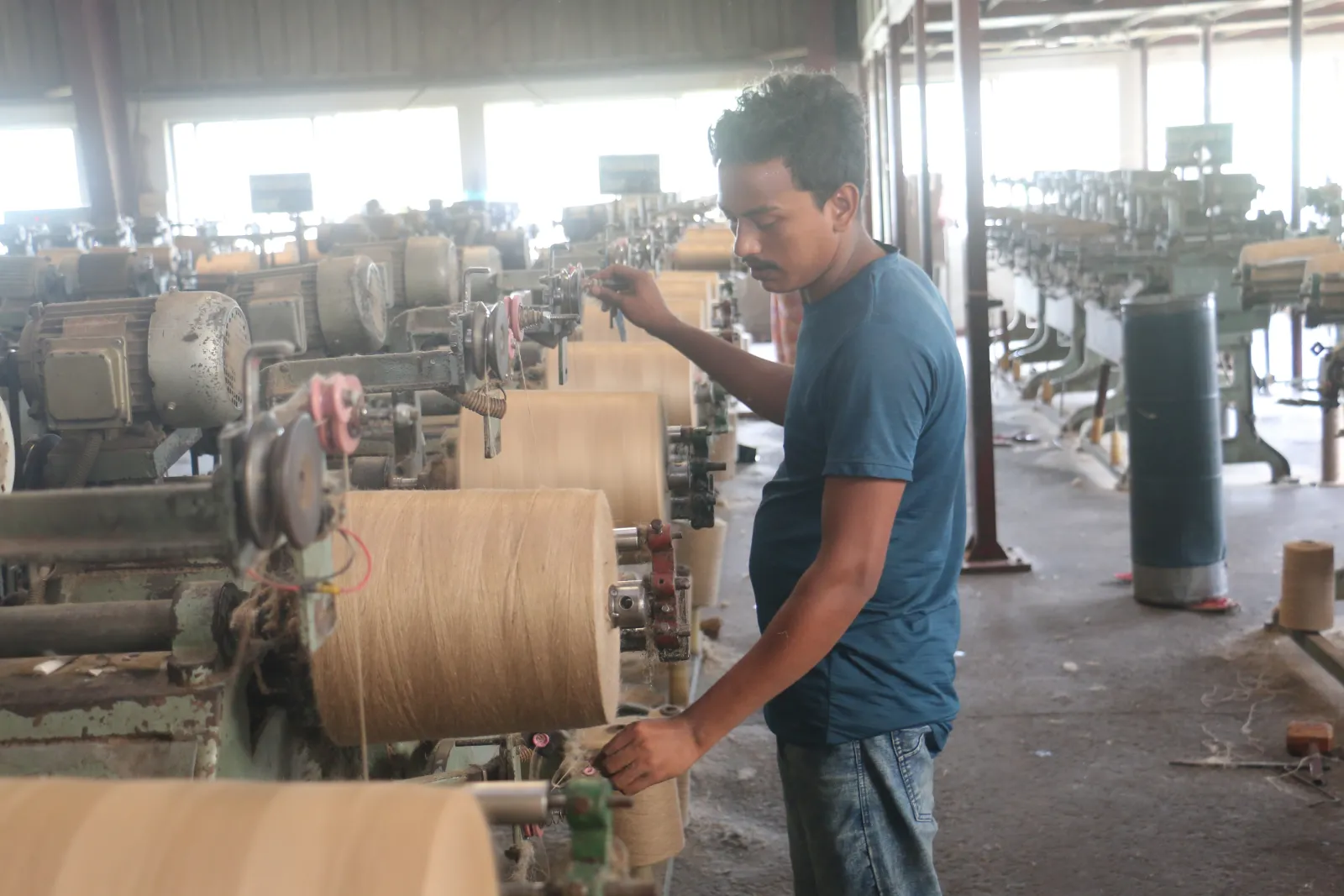
Beyond what the eye can see, reputable mills test every batch. The core measurements are tensile strength (how much load the yarn bears before breaking), weight per unit length (which confirms the count), and moisture content (jute is hygroscopic, so excess moisture means you are paying for water). At Wahab Jute Mills these checks run at multiple stages of production and again before packing.
How to write a proper jute yarn specification
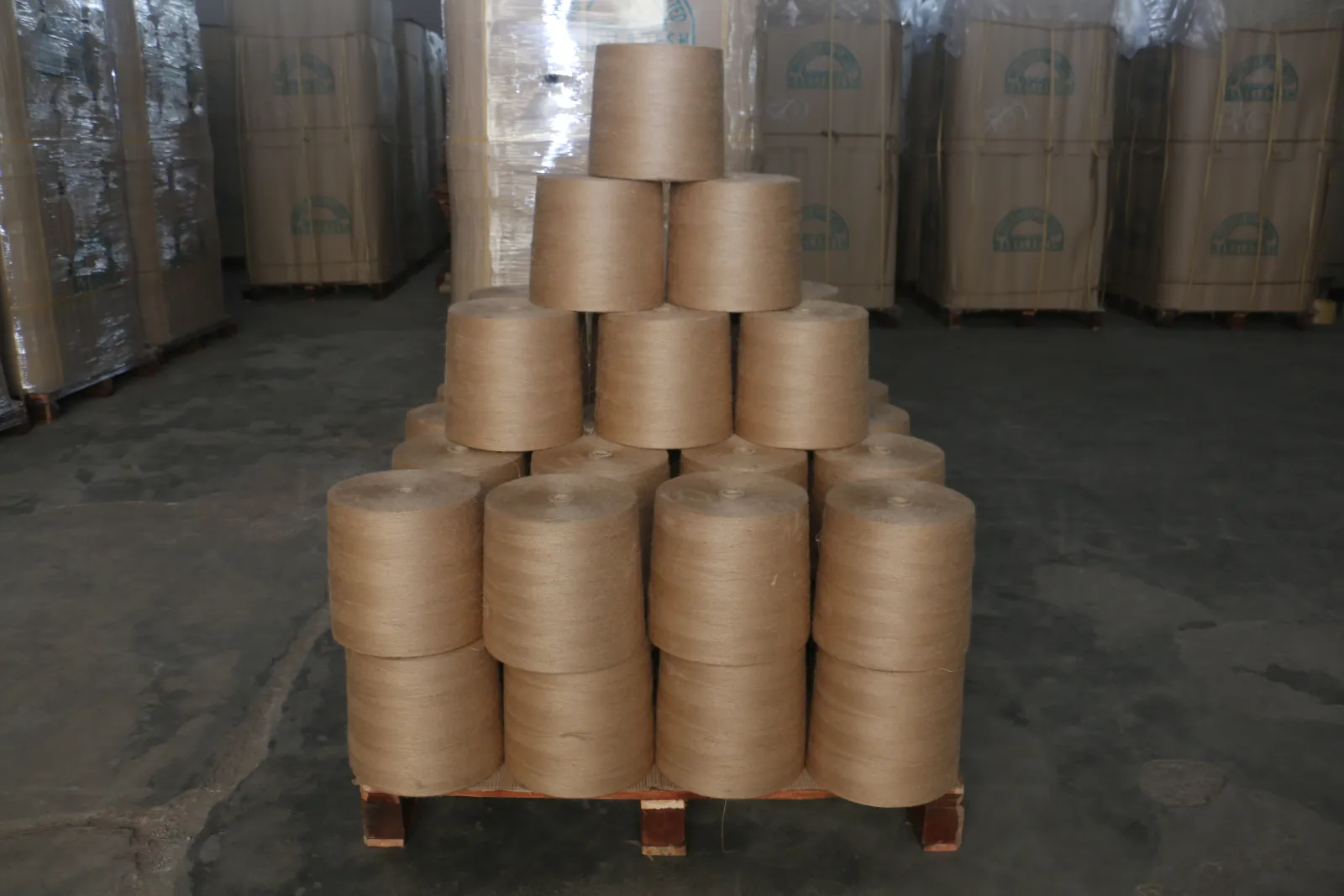
A complete specification removes guesswork. Include the count, ply, twist direction and turns-per-inch if known, the finish, the intended application, and your packaging preference (hanks, cones, paper tubes or warp beams). The more precise you are, the more accurate your quote — and the more closely the shipment will match your sample.
Specify it once, receive it every time
Consistency is the whole point of a good specification. Share yours with our team and we will confirm feasibility, send a sample, and hold that exact standard across every order. Request a quote to get started.