Every jute yarn buyer eventually has the same conversation with their production floor: the loom is stopping too often, the fabric is showing bars, or the finished goods are failing inspection. Almost always, the trail leads back to a yarn fault — and almost always, that fault was created somewhere upstream in the mill, long before the yarn was wound onto a bobbin. This guide walks through the main jute yarn faults, what causes them, how they are detected, and what a well-run mill does to prevent them.
Yarn faults rarely show up as a rejected shipment. They show up as loom downtime, higher waste, more seconds, and slower production — costs that quietly dwarf any per-tonne price saving on cheap yarn.
How a fault becomes your problem
A fault in the yarn translates directly into a cost on your floor. A thin place becomes a warp break and a machine stop. A slub becomes a visible defect in the cloth. Count variation becomes GSM variation across a roll, which becomes a customer complaint. When you are comparing suppliers, the fault rate matters at least as much as the headline price — a point we make in how to evaluate a jute manufacturer.
The main jute yarn faults
| Fault | What it looks like | Typical cause | Effect on your process |
|---|---|---|---|
| Thick & thin places | Visible variation in diameter along the strand | Irregular drafting at drawing/spinning; uneven sliver | Count/GSM variation, weak points, breaks |
| Slubs & lumps | Short, abrupt thick knots of tangled fiber | Poor carding, entangled or under-opened fiber | Visible fabric defects; needle/reed damage |
| Hairiness | Protruding fiber ends, fuzzy surface | Short fiber content, low twist, worn machine parts | Shedding, fly, poor fabric clarity |
| Twist variation | Sections harder or softer than others | Spindle speed or tension inconsistency | Uneven strength, streaky fabric |
| Weak / low-strength spots | Strand snaps below expected load | Low-grade or short fiber, insufficient twist, over-drying | Warp breaks, loom stoppages |
| Knots & bad piecings | Bulky joins where a break was repaired | Untrained or rushed piecing after a breakage | Snagging, stoppages, fabric defects |
| Oil stains / spots | Dark greasy patches on the yarn | Over-application of batching oil; machine contamination | Staining, dye/finish rejection |
| Specks, bark & foreign matter | Dark flecks or woody bits embedded | Inadequate fiber cleaning or low-grade fiber | Visible contamination in finished goods |
Where faults originate: walking the line
Nearly every fault above can be traced to a specific stage. Understanding the sequence — which we cover end to end in how jute yarn is made — tells you where to press a supplier.
1. Fiber selection and grading
Everything starts here. Low-grade fiber with high root content, short staple, bark or specks will carry those defects all the way to the finished yarn — no amount of downstream care fully removes them. This is why fiber grade selection is the first quality gate, not a purchasing afterthought.
2. Batching and softening
Fiber is batched and treated with emulsion (water and batching oil) to soften it. Get the ratio or the conditioning time wrong and you get two classic problems: too little and the fiber is brittle and breaks in processing; too much and you get oil-stained yarn that can fail finishing.
3. Carding
Carding opens and parallelises the fiber and removes impurities. Worn card clothing, wrong settings or overfeeding leave entangled fiber — which becomes slubs and neps later.
4. Drawing
Drawing refines the sliver and evens it out. Irregular drafting here is the single biggest source of thick and thin places, because any unevenness is multiplied at spinning.
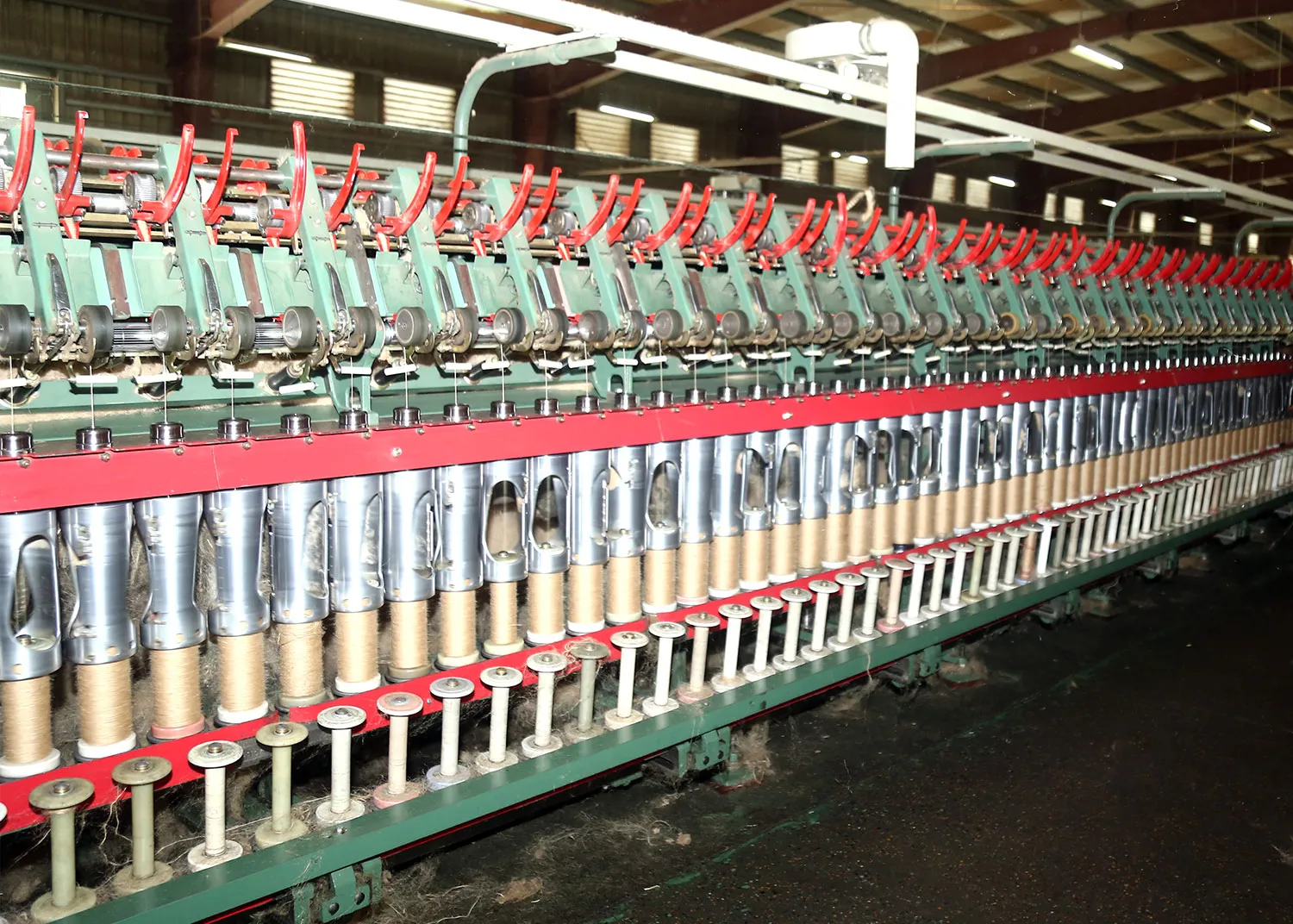
5. Spinning
On the frame, count and twist are set. Inconsistent spindle speed, tension or draft produces twist variation and count drift; poor piecing after a break leaves knots. This is also where insufficient twist quietly creates the weak spots that break on your loom.
6. Winding and packing
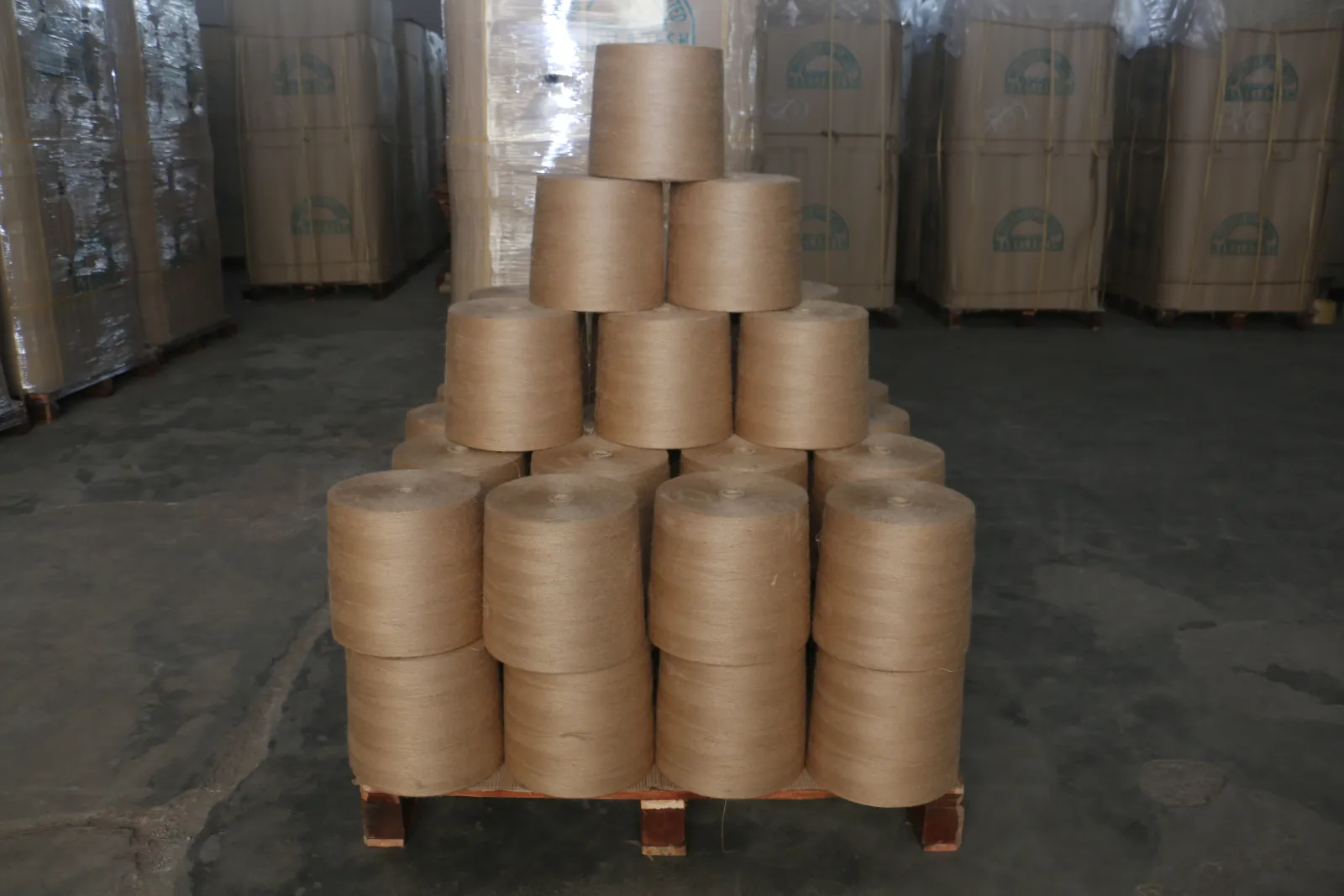
Faults can still be introduced at the end: bad winding tension, contamination, or absorbing moisture in storage — which changes weight and can encourage mildew.
How faults are detected
A serious mill does not rely on a final glance. Detection combines instrument testing with structured visual assessment:
| Test | What it measures | Fault it catches |
|---|---|---|
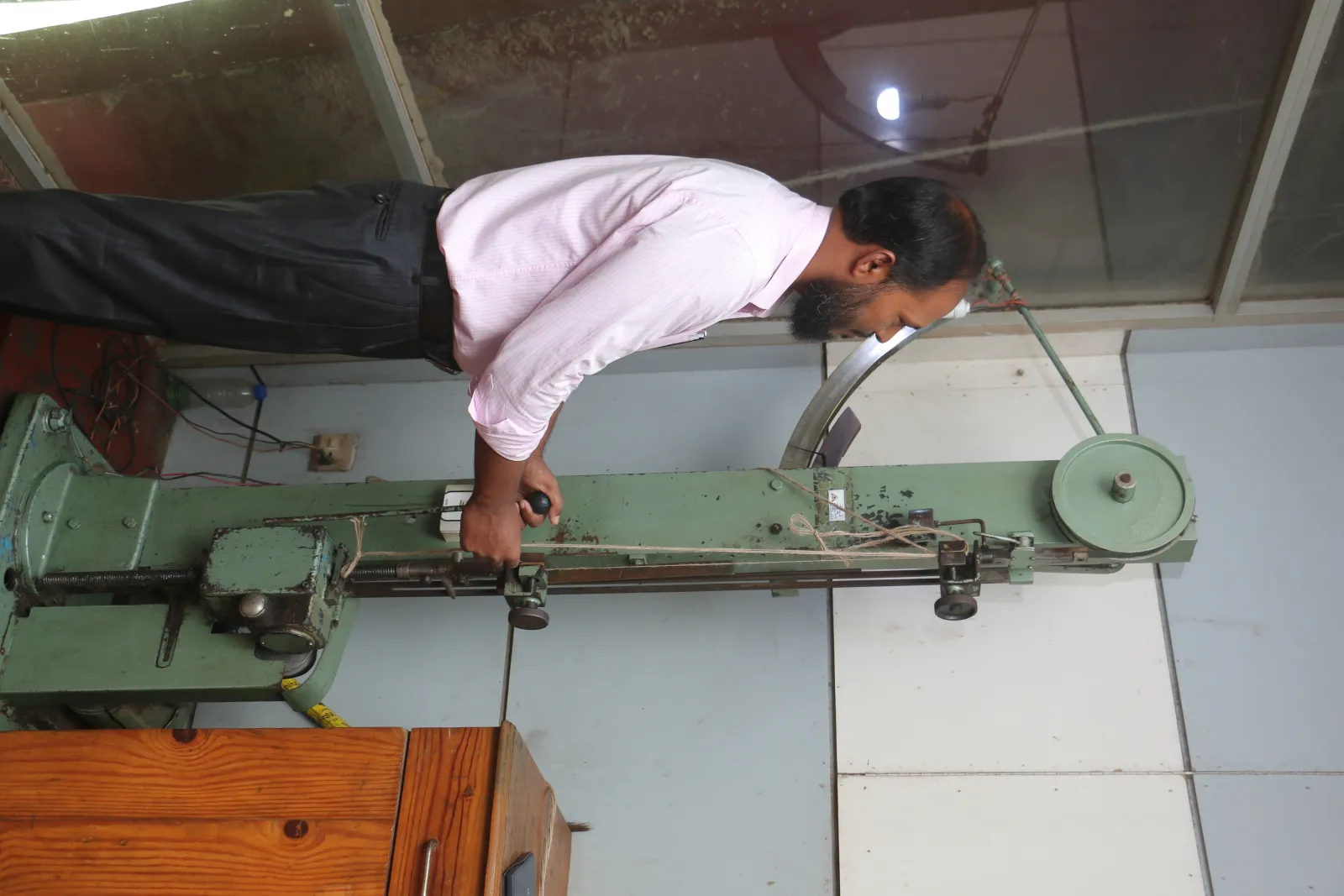
| Wrap reel + balance | Weight of a fixed length (the count) | Count drift, thick/thin averaging |
| Tensile / breaking strength | Load at break | Weak spots, under-twist, poor fiber |
| Twist tester | Turns per inch and direction | Twist variation, wrong spec |
| Moisture / oven-dry | Moisture content and regain | Over-wet yarn, weight discrepancy |
| Evenness testing | Variation along the strand (U% / CV%) | Thick and thin places, periodic faults |
| Yarn appearance board | Visual grading against a standard | Slubs, hairiness, specks, staining |
The count check deserves a note: because jute count is the weight of a fixed length, a wrap reel test is the fastest honest check that you received what you ordered. The maths is in our jute yarn count guide.
Some fault level is normal — the question is control
Jute is a natural fiber. No mill produces a yarn with zero irregularity, and any supplier claiming perfection is overselling. What separates a reliable mill is not the absence of faults but the control of them: a known, stable fault level, batch to batch, that your process is set up to absorb. Consistency is the product.
You can design a process around a known fault rate. You cannot design one around a supplier whose quality moves every shipment.
How a good mill prevents faults
- Grades and selects incoming fiber before it reaches the floor, rejecting off-spec lots
- Controls batching emulsion ratio and conditioning time to a recipe, not by eye
- Maintains and re-sets carding and drawing equipment on a schedule
- Trains operators specifically on piecing technique after breakages
- Tests at multiple stages, not only before packing
- Keeps batch traceability so a problem can be traced back to a machine and a shift
That is the system we describe in how we ensure consistent quality and on our quality and certifications page.
What to ask your supplier
- What fiber grade is this yarn spun from, and does it vary by batch?
- Can you share count, strength and moisture test data for my lot?
- What is your typical fault or breakage rate, and how is it recorded?
- How is twist controlled and verified?
- Do you maintain batch traceability if I report a problem?
- Will the production run match the sample I approved — and how do you guarantee that?
Ask for the test report with your first shipment and keep it. Two or three shipments in, you have a baseline — and any drift in count, strength or moisture becomes immediately visible.
Frequently asked questions
What causes jute yarn to break on the loom?
Usually thin places, weak low-twist sections, or brittle over-dried yarn — all traceable to drafting, twist setting, or fiber grade and conditioning. Excessive warp tension on your side can compound it.
Why does my fabric show bars or streaks?
Typically count variation or twist variation between bobbins or batches, so the cloth reflects light differently across those bands. It is a consistency problem, not usually a strength one.
Can you supply a quality/test report with the yarn?
Yes — we issue quality certificates and test data with shipments on request. Ask for it at the quotation stage so it is built into the order.
Does a higher fiber grade eliminate faults?
It reduces them substantially — especially specks, bark and weak spots — but processing control still matters. The best results come from good fiber and a disciplined line.
Yarn you can plan production around
We spin jute yarn to your count, ply and twist in Khulna, test every batch, and hold that standard order after order. Send us your specification — or a sample of yarn that is giving you trouble — and we will match it and quote. Request a quote.